
Septic System 101
Essential tips and best practices to maintain your septic system and avoid costly repairs
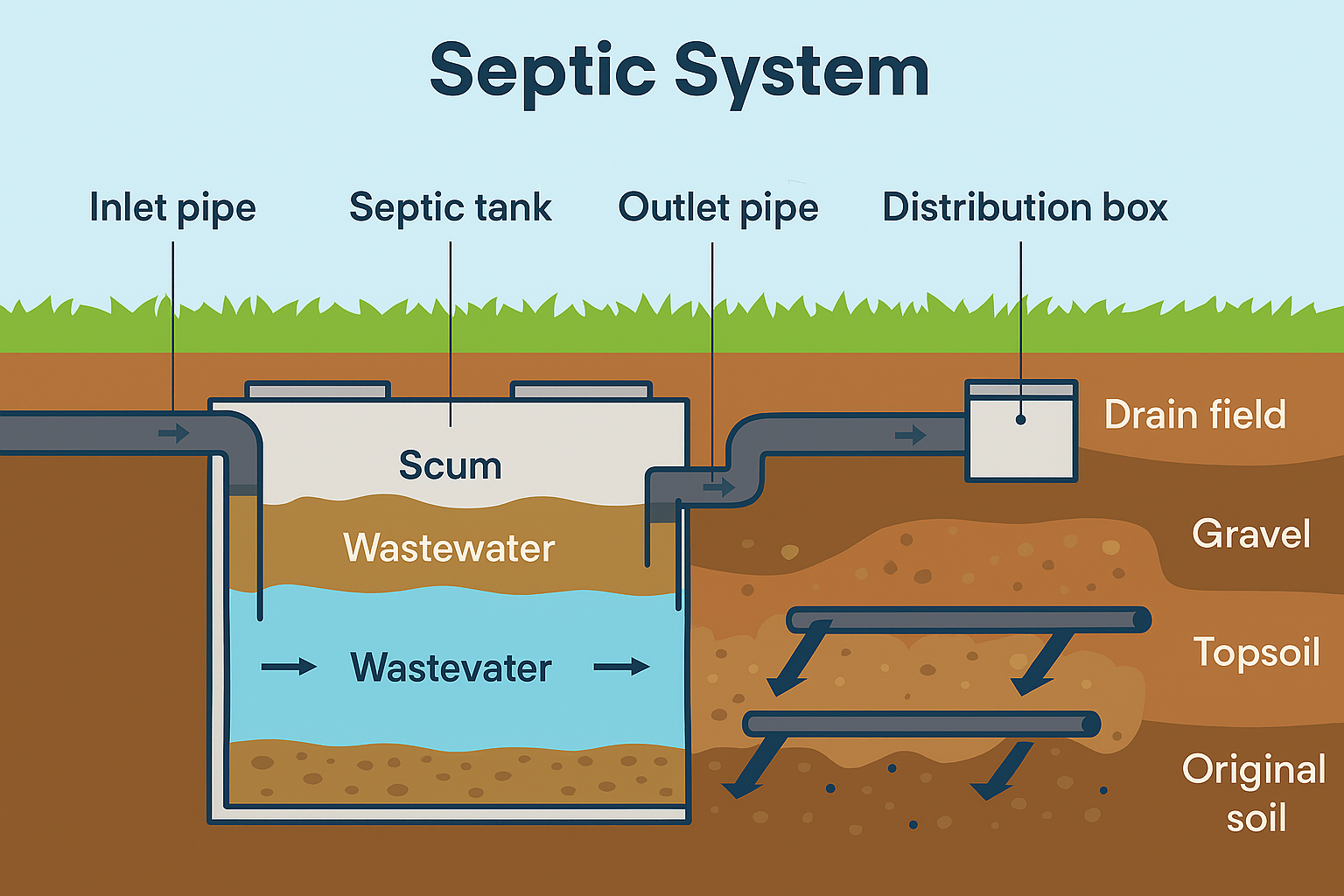
Understanding Your Septic System
Your septic system is a critical component of your home that requires regular maintenance and care. Following these best practices will extend the life of your system, prevent costly emergencies, and protect your property investment. These guidelines are based on recommendations from the State of Arizona and Yavapai County for our local soil conditions.
Regular Pumping Schedule
The State of Arizona recommends that in this soil content for a family of 4 with a garbage disposal, septic tanks should be pumped every 3-5 years. For Eljen systems, Yavapai County recommends pumping once every 2-3 years.
Regular pumping prevents solids from overflowing into your drain field, which is one of the most expensive septic repairs possible.
What Goes Down the Drain Matters
If you put nothing but solid waste and limit toilet paper use, your septic system will last much longer. Avoid flushing non-biodegradable items, feminine hygiene products, paper towels, or excessive amounts of toilet paper.
Clean Your Effluent Screen
If you clean the effluent screen (for systems built in 2001 or newer) every 6-12 months, it will reduce the possibility of sewer backup significantly.
Maintain Bacterial Activity
Use 3-4 tablespoons of ordinary baking yeast or bioForce (see our Recommended Products page) once a month to keep your system active in breaking down waste.
Important: Limit or avoid using antibacterial soaps and bleach. These products can kill the active bacteria your septic system needs to function effectively.
Protect Against Root Invasion
Keep all trees (especially cottonwood and weeping willow) away from your septic system, including leach lines and tank, to avoid root invasion. Root damage can be extremely costly to repair.
Limit Garbage Disposal Use
If you limit or avoid using your garbage disposal, it will greatly reduce the chances of backup due to grease and materials which will not break down. Food waste, especially fats and oils, can clog your system.
Additional Best Practices
- Spread out laundry loads throughout the week instead of doing many loads in one day
- Use water-efficient fixtures to reduce the overall load on your system
- Never park or drive heavy vehicles over your drain field
- Divert roof drains and other surface water away from the drain field
- Keep detailed records of septic system maintenance and inspections
Have Questions About Your Septic System?
Contact us for expert advice and service